
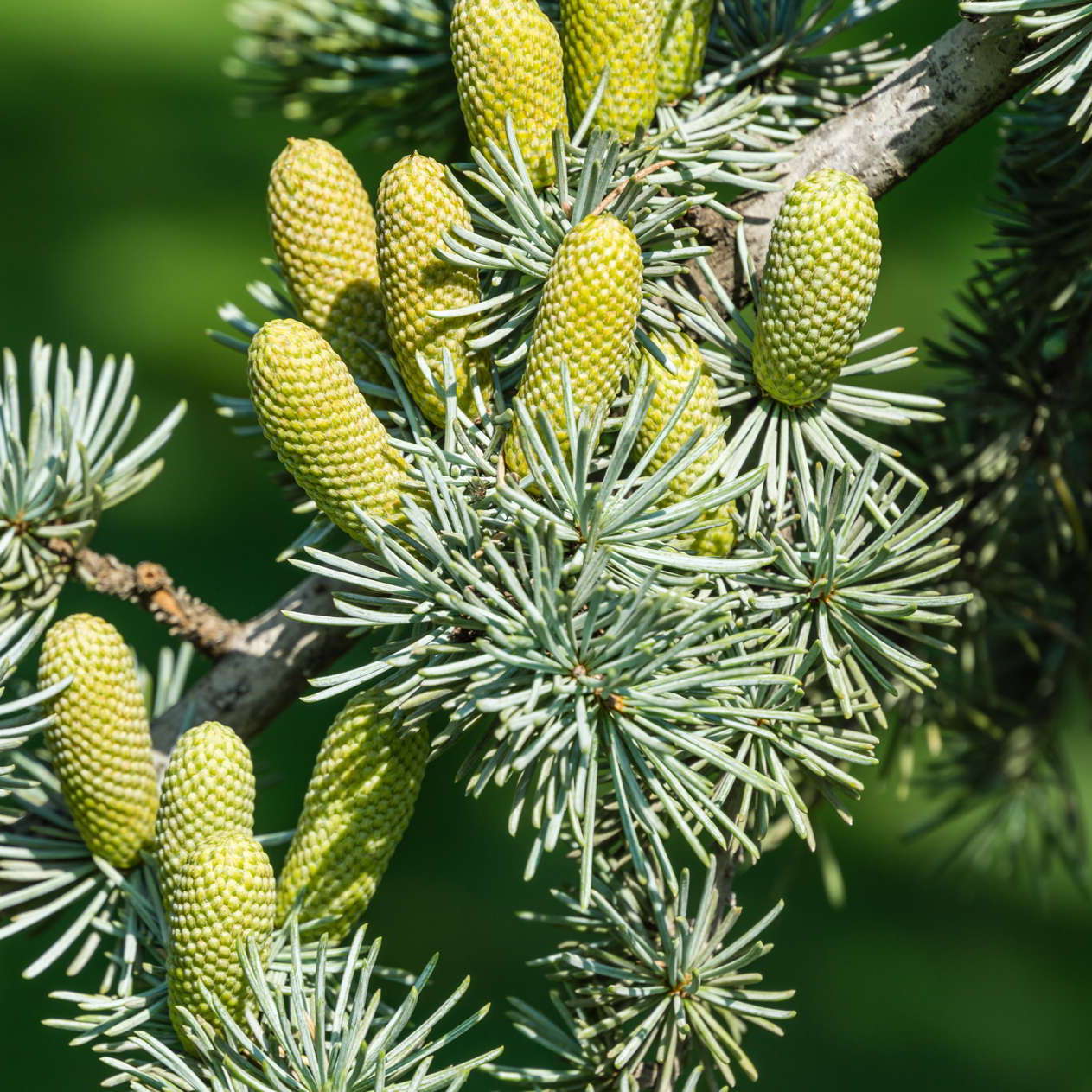
Description
Cedrus libani – Lebanon Cedar
Brief description: The Lebanon Cedar is one of the most iconic symbols of the Orient and a tree of majestic appearance – with wide-spreading, table-like horizontal branches, blue-green needles, and a distinctive silhouette that resembles a flat tent roof in maturity. As a specimen tree in parks and large gardens, it displays unmatched dignity and longevity – and is a living piece of cultural history.
- Lebanon Cedar specimens up to 800 years old
- Slow-growing
- Good compatibility with other tree species
- Particularly suitable tree species for dry sites
- Forestry-hardy
- Heart root formation
- Offers an alternative for spruce sites
- Light-demanding species
- Bare-root plants occasionally show poor establishment success
Climatic characteristics & site requirements: The Lebanon Cedar tolerates drought and heat exceptionally well – it originates from the summer-dry Mediterranean mountains of Lebanon and Turkey. It is particularly well-suited for the warmer and drier regions of southern Germany such as the Rhine plain, the Neckar valley, and warm Franconian areas. It prefers well-drained, calcareous to neutral soils. Winter-hardy to –20 °C; young plants may be frost-sensitive in exposed locations. It does not tolerate waterlogging.
Advantages: Majestic, distinctive habit, drought and lime-tolerant, evergreen, very long-lived, well-suited for warm regions of southern Germany, historically and culturally significant.
Disadvantages: Very large space requirement – not a tree for residential gardens, slow juvenile growth, does not tolerate waterlogging, frost-susceptible in harsh elevations and exposed locations, non-native.


