
Description
Castanea sativa – Sweet Chestnut
Quality: 1/0 P 30-50
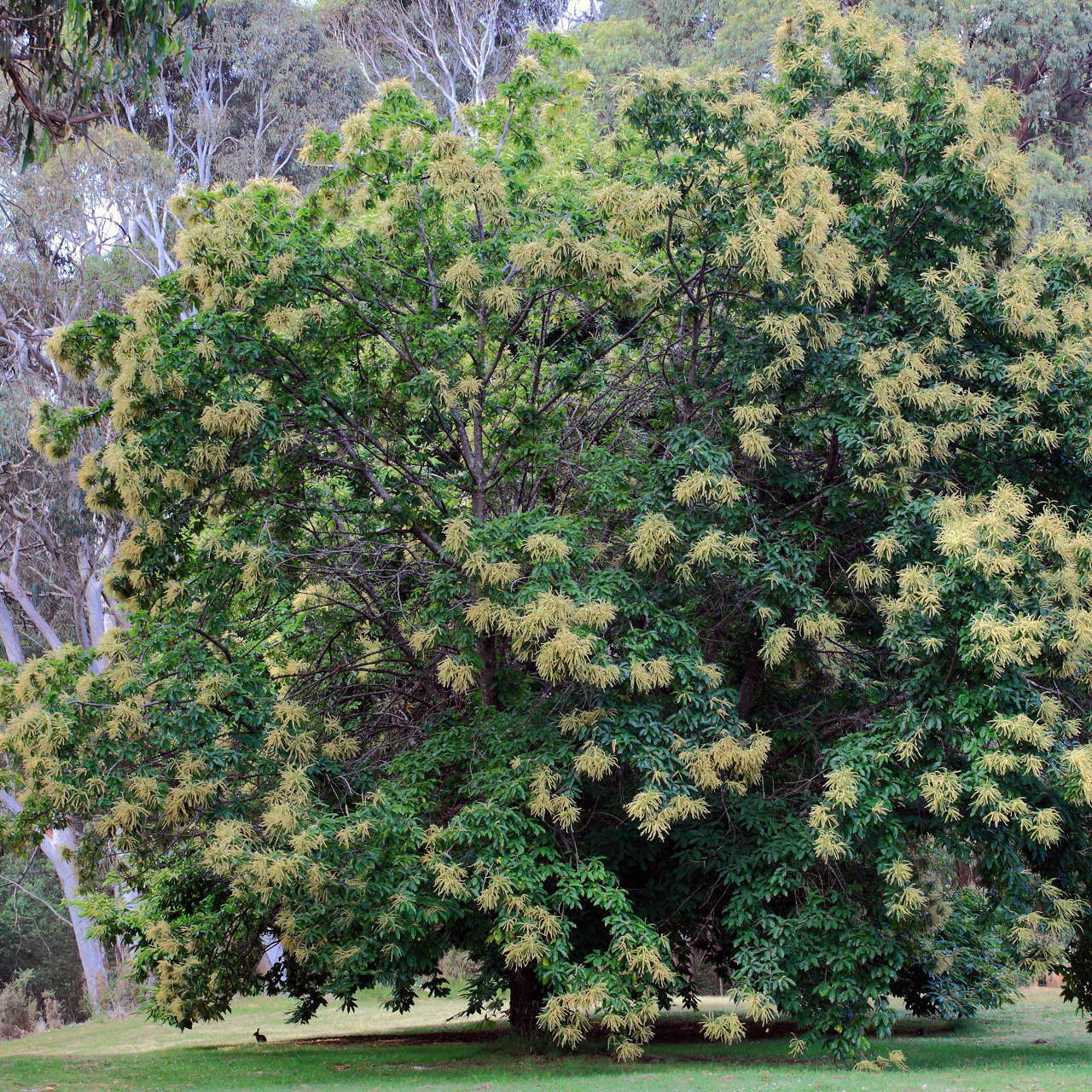
Brief Description: The Sweet Chestnut uniquely combines culinary delight, ecology, and garden design: In July and August, it bears creamy-white, fragrant flower panicles that attract bees in large numbers, and in autumn, the spiky fruits with edible marrons fall. Its large, glossy dark green foliage and distinctive bark make it an impressive solitary tree – and one of Europe’s longest-lived trees.
Climatic Properties & Site Conditions: The Sweet Chestnut loves warmth, sun, and acidic, well-drained soils – it tolerates calcareous sites poorly. In Southern Germany, it is native and cultivated in the warmest regions: Kaiserstuhl, Markgräflerland, Palatinate, and the wine-growing areas along the Neckar and Main rivers are ideal locations. It is out of place in cool altitudes and on calcareous soils of the Swabian Alb. With increasing global warming, its cultivation area in Southern Germany is expanding significantly.
Advantages: Edible fruits, excellent bee pasture in midsummer, native to warm regions, very long-lived, imposing habit, valuable timber, climate-adapted for warm locations.
Disadvantages: No calcareous soils, unsuitable for cool altitudes, requires ample space, chestnut blight is a problem in some regions, fruits and spiky husks require care, not a shrub for small gardens.


