
Description
Liriodendron tulipifera – Tulip Tree
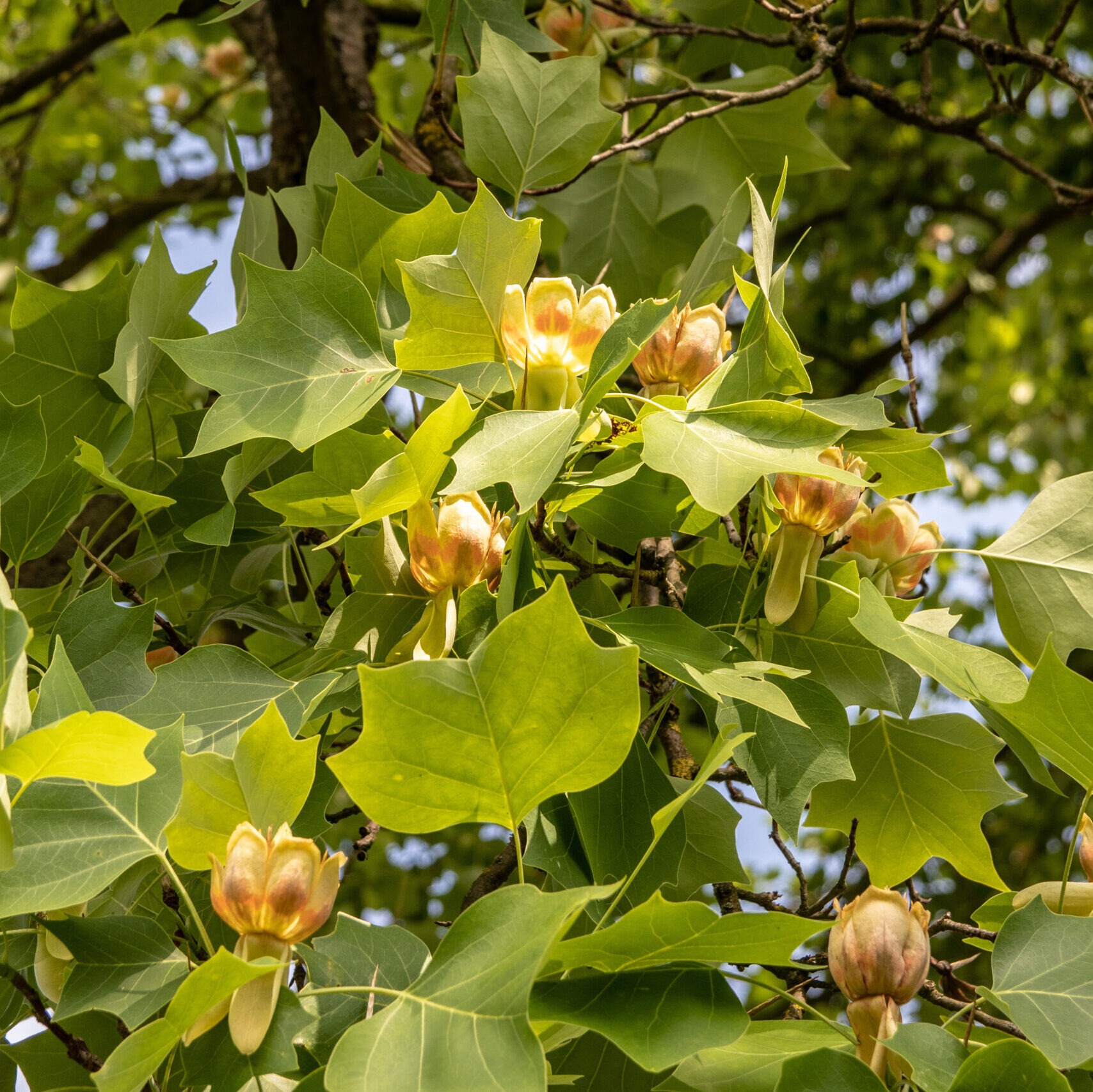
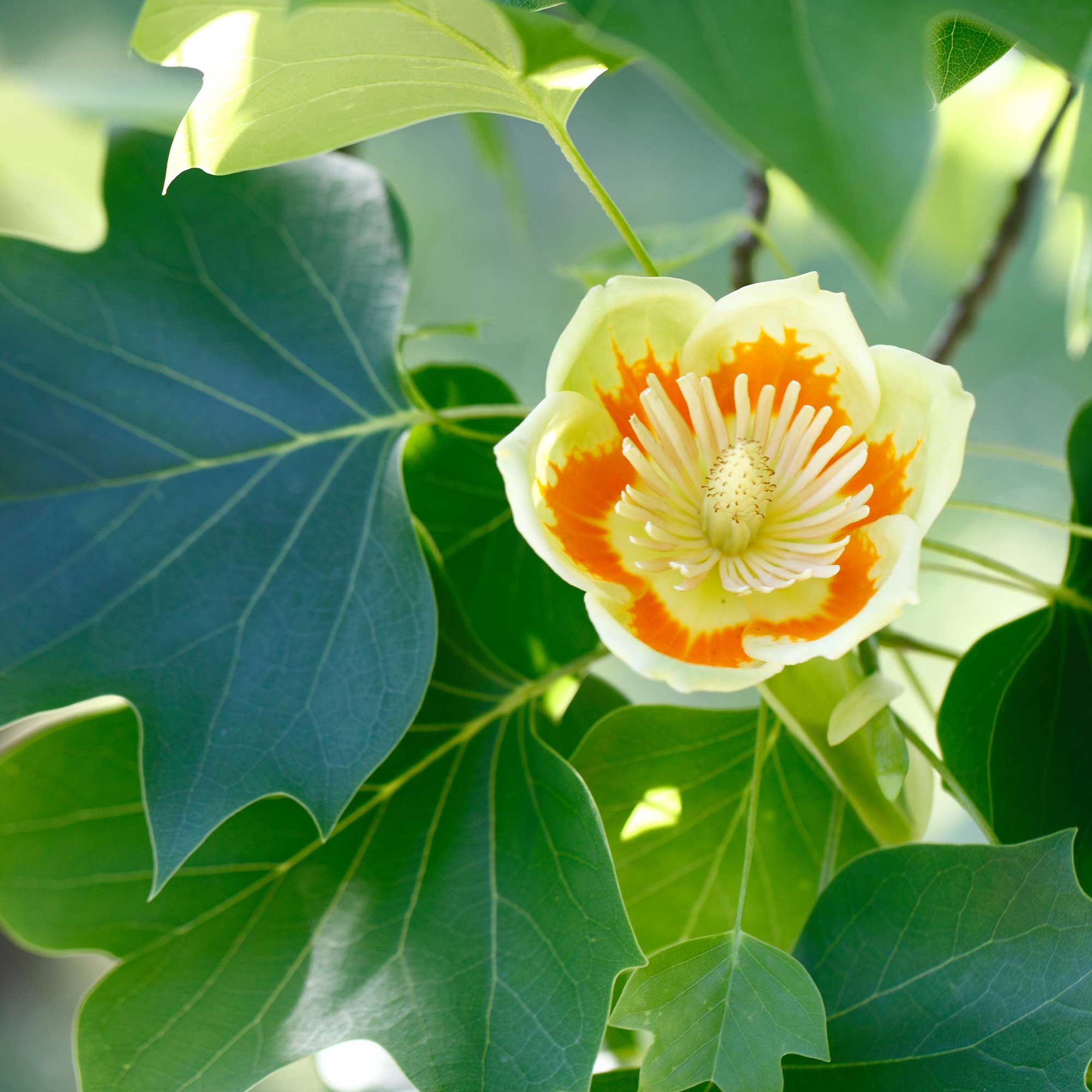
Short description: The North American tulip tree is one of the most magnificent deciduous trees for Central European gardens – featuring distinctive, saddle-shaped lobed foliage, an imposing straight trunk, and bright yellow-green, tulip-shaped flowers with orange centers in June. In autumn, the foliage glows in a pure, radiant yellow. As a specimen tree in parks and large gardens, it is an absolute highlight.
- Deciduous tree
- Flowering period: May–June
- Tulip-like flowers
- Deep taproot or heart-shaped root system
- The bark and roots are also used medicinally
- The roots are used in the production of spruce beer
- Belongs to the magnolia family
- Integrates well into natural native forest communities
Climatic characteristics & site conditions: The tulip tree prefers warm, sunny locations with deep, fresh, and well-drained soils on an acidic to neutral basis. It is hardy down to –25 °C and can be cultivated in all areas of Southern Germany. It develops particularly well in the Rhine Valley, the Lake Constance region, and protected urban locations. It does not tolerate waterlogging or highly calcareous soils well. Young plants are sensitive to late frosts – prefer sheltered locations.
Advantages: Unique tulip-shaped flowers, spectacular autumn yellow, imposing trunk, fast growth, long-lived, attractive distinctive foliage.
Disadvantages: Non-native, no ecological value for native insects, avoids lime soils and waterlogging, high space requirement, sensitive to late frost when young, not suitable for small gardens.


