

Description
Tsuga heterophylla – Western hemlock
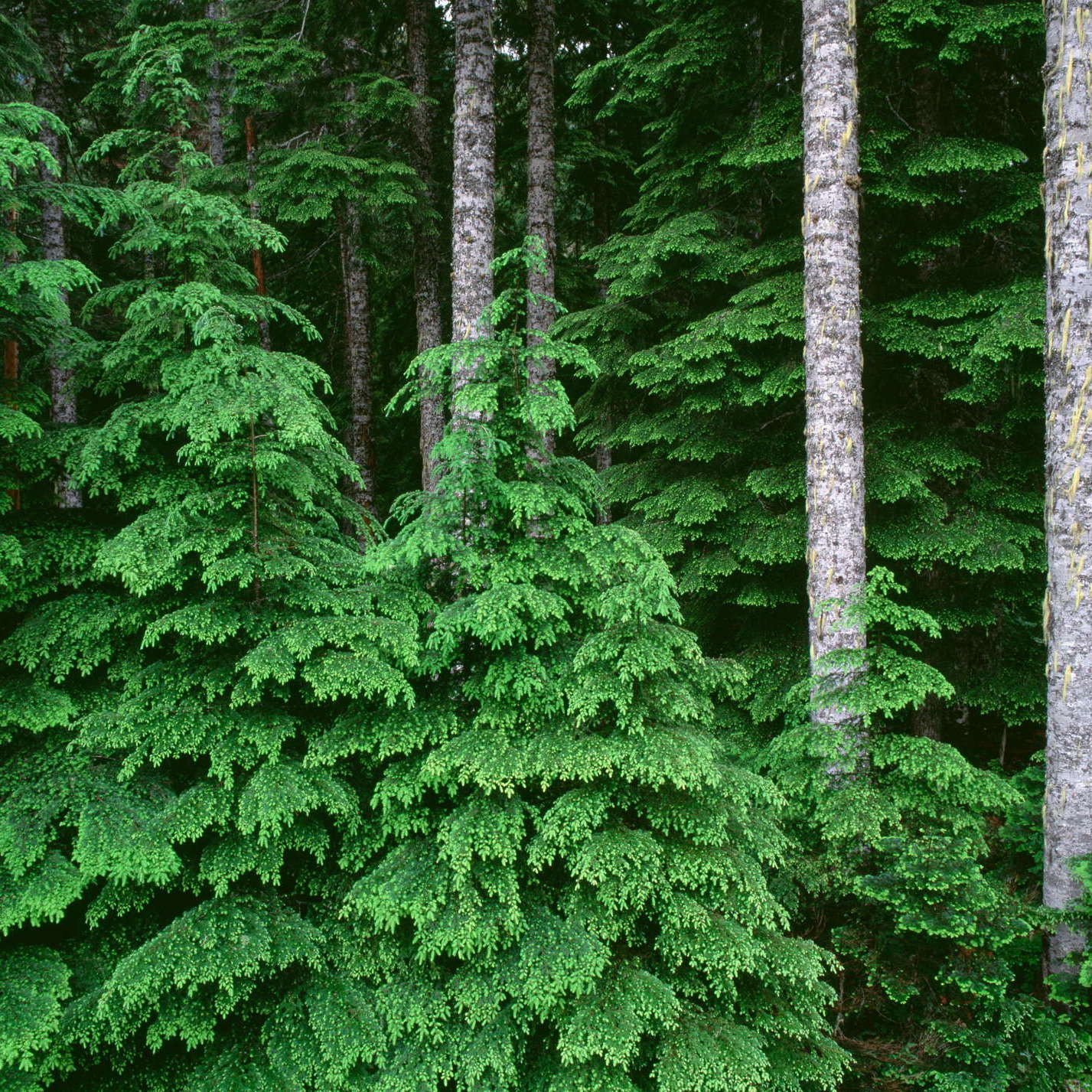
Short description: The western hemlock from the Pacific Northwest of North America is one of the most elegant conifers of all—with fine, delicate needles, drooping shoot tips, and an airy, translucent crown structure that gives it an almost graceful appearance. As a specimen tree, hedge plant, or underplanting beneath light deciduous trees, it is exceptionally versatile and hard to beat in shady locations.
- Height up to 50 m
- Shade-tolerant tree species, as sheltered from wind as possible
- Strong regeneration potential
- Important timber
- Very competitive, not suitable for mixed stands
- Generally good establishment success
Climatic characteristics & site conditions: Western hemlock prefers humid, cool sites with fresh, acidic, well-drained soils—it thrives particularly well in the high-rainfall regions of the Black Forest, the Allgäu, and the Bavarian Forest. Prolonged summer drought and hot, muggy lowland sites do not suit it. It tolerates calcareous soils poorly. Hardy down to –25 °C; late frosts can damage young shoots. Its shade tolerance is outstanding—hardly any conifer species copes with so little light.
Advantages: Elegant, graceful appearance, exceptional shade tolerance, also suitable as a hedge plant, hardy, attractive drooping shoot tips, ideal for moist mountain sites.
Disadvantages: Not native, unsuitable for dry lowland sites and calcareous soils, susceptible to spider mites in heat and drought, does not tolerate waterlogging, rarely available in the private garden trade.


