
Description
Juglans regia – Common walnut
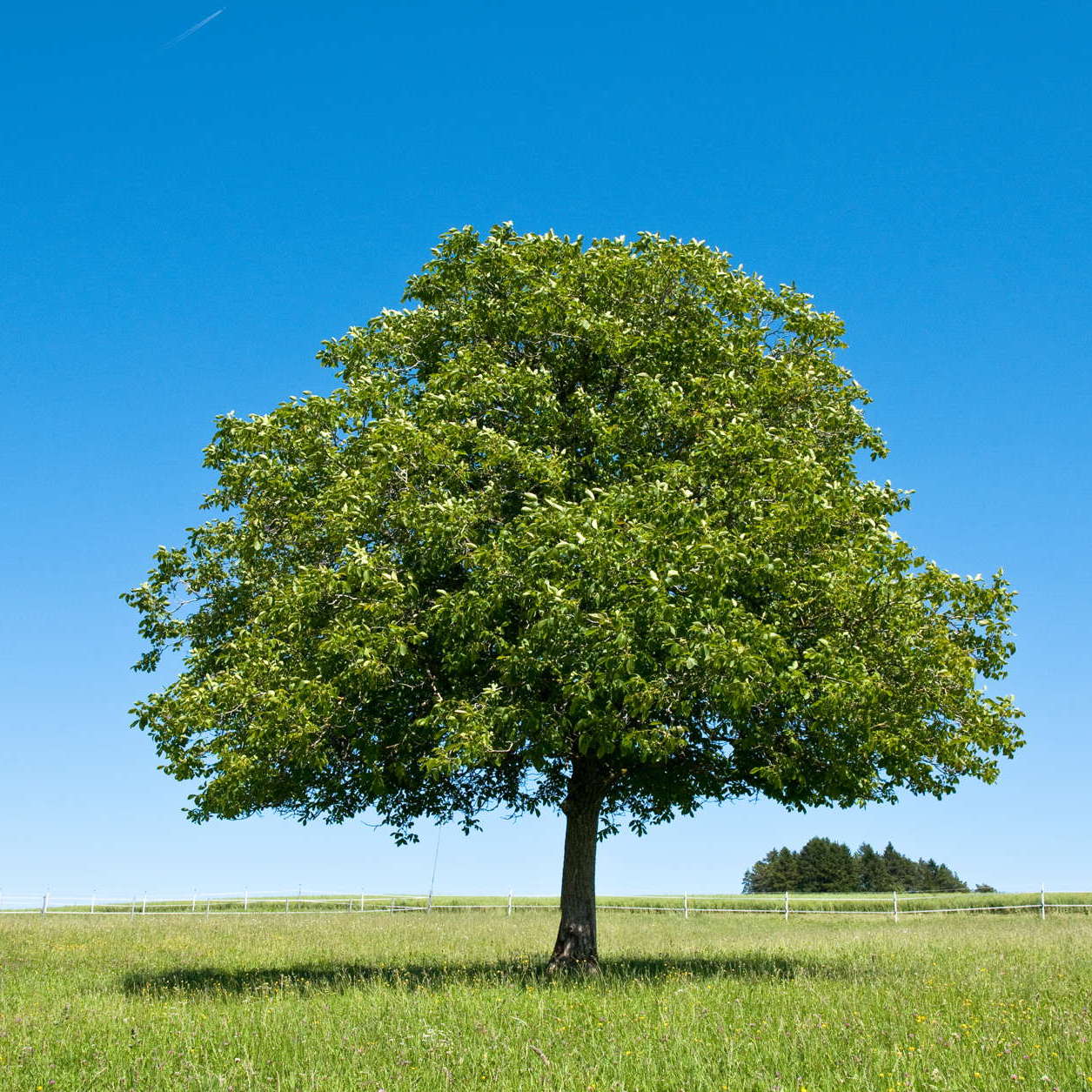
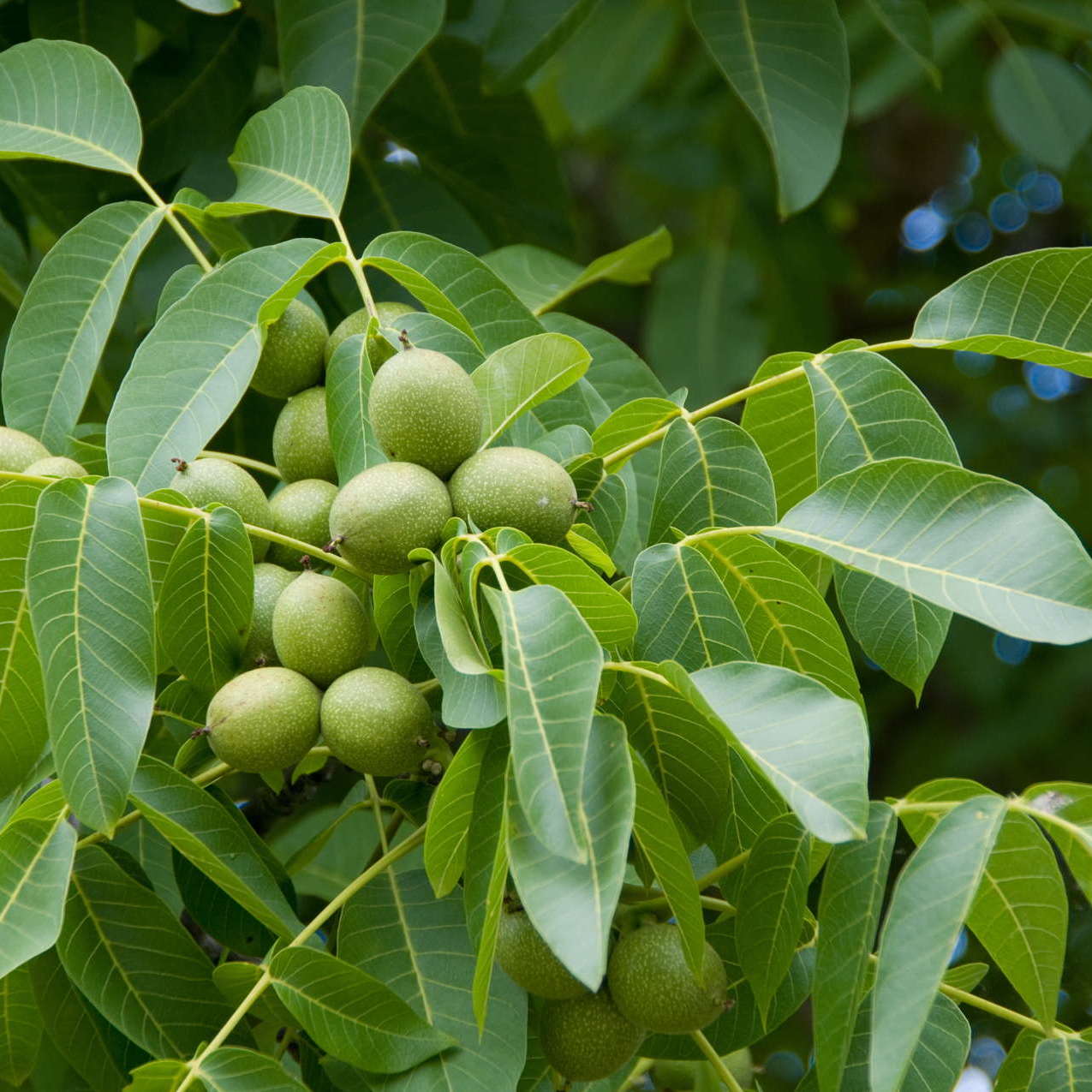
Short description: The common walnut uniquely combines usefulness and beauty: in autumn it yields aromatic nuts in abundance, its broad crown provides dense shade, and when rubbed, the leaves release an unmistakable, spicy scent. As a long-lived specimen tree with an impressive crown, it has been a classic of Central European gardens for centuries – and one of Europe’s most valuable timber trees.
- Taproot
- Height approx. 25 m
- Frost-sensitive, but drought-tolerant
- 1–2 m growth per year possible
- Fast juvenile growth
Climatic characteristics & site conditions: The walnut has long been cultivated as a native in the warmer regions of southern Germany – the Upper Rhine Plain, the Neckar Valley, the Lake Constance region and Franconian wine-growing areas are ideal sites. It prefers warm, sunny locations with deep, fresh and well-drained soils. It does not tolerate waterlogging. Late frosts can damage young shoots and flowers – choose frost-sheltered sites. Hardy down to –25 °C once established.
Advantages: Edible, aromatic nuts; impressive crown with broad shade; very long-lived; valuable timber; proven in warm locations; low-maintenance once established.
Disadvantages: Requires a lot of space; juglone in the leaves inhibits the growth of many neighbouring plants (allelopathic); sensitive to late frost; no waterlogging; not suitable for small gardens; falling fruit can be a nuisance.


