
Description
Cedrus deodara – Deodar Cedar
Brief description: The Deodar Cedar is the most elegant of the three cedar species – with softly drooping branch tips, silvery blue-green needles, and a flowing, picturesque habit reminiscent of a large tent. Even young plants develop a distinctive charisma that enriches any garden. As an evergreen specimen tree for warm, sheltered locations, it is the most sensitive of all cedars – but also the most beautiful.
- Elegant growth habit
- Susceptible to winter desiccation – similar to Douglas fir
- Fastest-growing cedar species
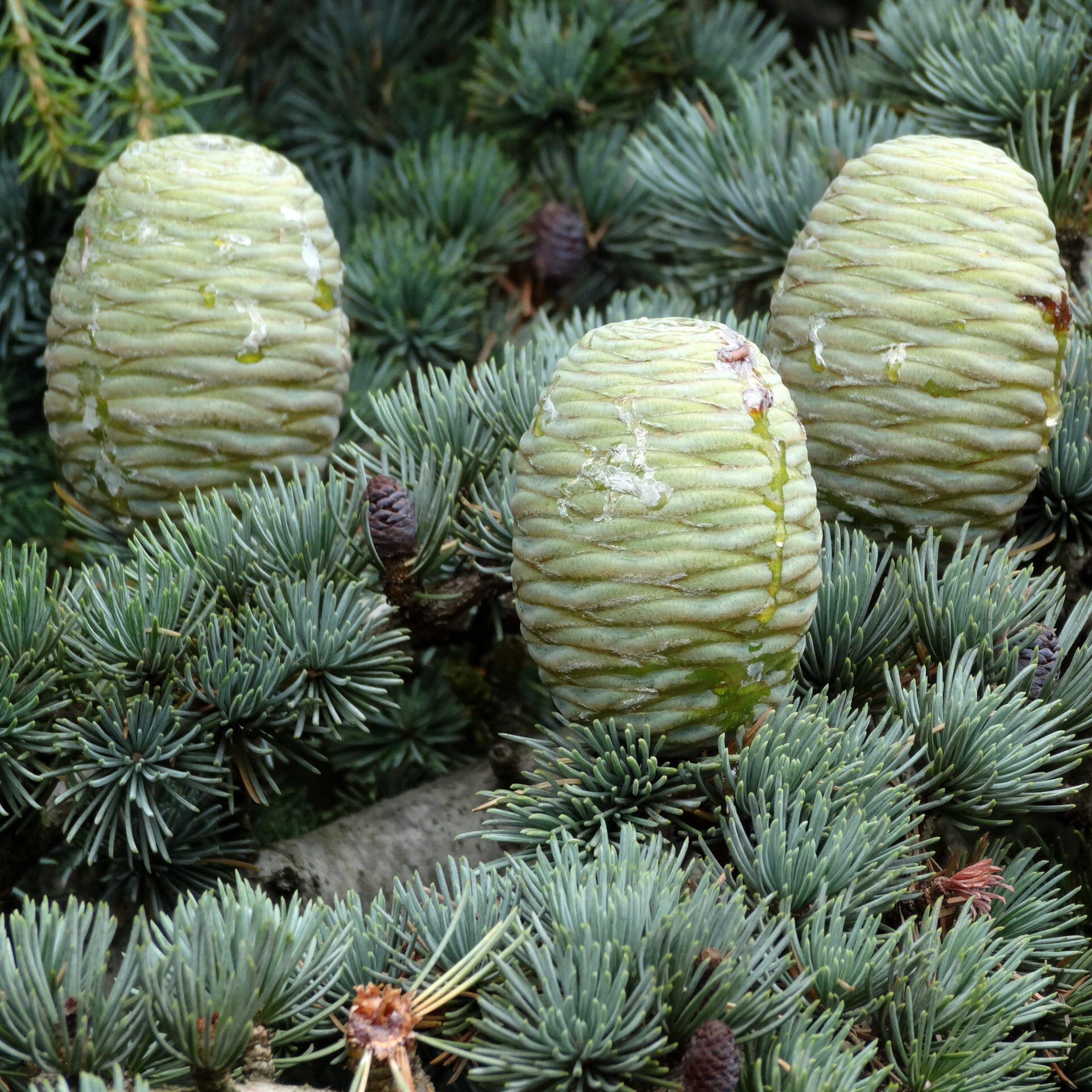
- Upright cones
- Park tree
Climatic characteristics & site conditions: The Deodar Cedar is hardy to approx. –15 to –20 °C, making it the most frost-sensitive of the three cedar species. It is only suitable for the mildest regions of Southern Germany – Kaiserstuhl, Markgräflerland, Lake Constance region, the Stuttgart basin, and similar warm urban locations. In harsh locations, altitudes above 400 m, and during drying easterly winds, it can suffer significant frost damage. It prefers well-drained, moderately dry soils on an acidic to neutral basis; waterlogging is fatal.
Advantages: Most elegant habit of all cedar species, silvery-blue needles, evergreen, picturesque drooping branches, an incomparable specimen tree in warm locations.
Disadvantages: Most frost-sensitive cedar species – only for the mildest locations, no waterlogging, unsuitable for harsh high altitudes, slow juvenile growth, high space requirement, non-native.


