
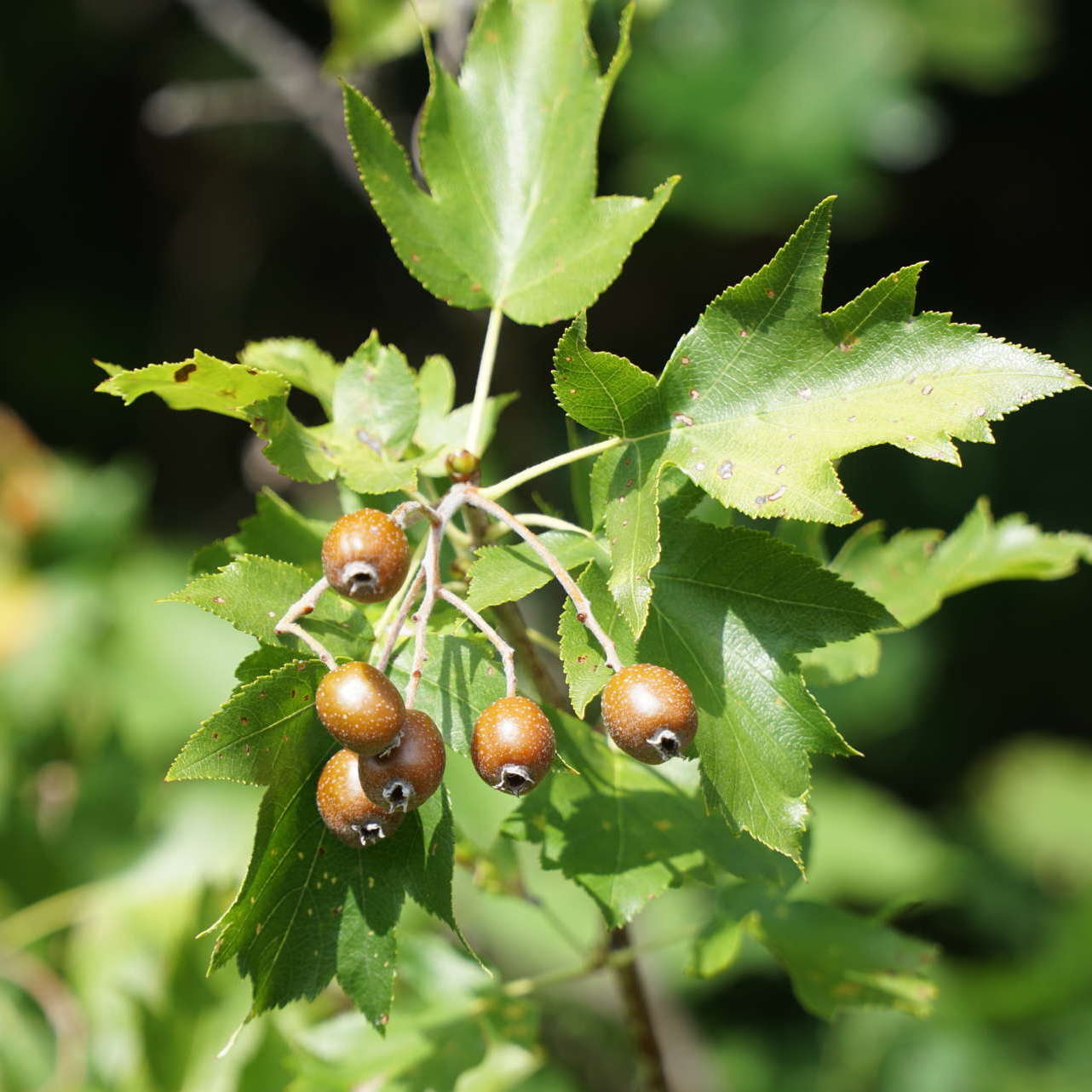
Description
Sorbus torminalis – Wild Service Tree
Brief Description: The Wild Service Tree is one of the most valuable and rarest native tree species – with one of the most expensive utility timbers in Europe and a four-seasonal appeal that is second to none. In May, white flower umbels; in summer, dark green, maple-like foliage; in autumn, a blaze of color in scarlet and orange – plus brown-red fruits eagerly eaten by wild birds. Planting one is simultaneously a contribution to species conservation.
- most expensive timber species in Germany
- Mature height up to 25m
- Very drought-tolerant, nutrient-loving
- Wood used, among other things, for instrument making
- Weak competitor
- Can be mixed with oak
- Fruit with high vitamin C content
- Also used for brandy production
- Deep-rooting
Climatic Properties & Site Conditions: The Wild Service Tree is native to the warm and dry forests of southern Germany – on the Swabian Jura, in the Franconian Jura, in the Black Forest, and in the shell limestone regions along the Neckar and Main rivers. It tolerates drought, calcareous soils, and heat excellently and is considered one of the most climate-resilient native tree species overall. It thrives poorly on waterlogged or acidic soils. With climate change, its potential distribution in southern Germany will continue to increase.
Advantages: Native and ecologically high-value, threatened by decline – planting is species conservation, exceptional autumn foliage, tolerant of lime and drought, valuable timber, fruits as bird food.
Disadvantages: Very slow growth, very rare and expensive in trade, no acidic or waterlogged soils, not a shrub for structured garden design, requires considerable space when mature.


